President Herney publicly admits his mistake about the meteorite
Deception PointPresident Herney publicly admits his mistake about the meteorite in a second presidential broadcast, reversing the claim that had been presented as proof of life from space. The admission follows the discovery that the meteorite evidence was compromised; rather than let the error remain concealed or shift its burden to others, Herney addresses the public and accepts responsibility. His correction ends the scientific triumph, but its contrast with Senator Sexton’s political exposure makes candor itself consequential.
Causes and Background
The announcement had been prepared as a major national event. Herney had scheduled a White House press conference for eight that evening, after four civilian scientists—independent of NASA and using their own equipment—had confirmed the discovery. He understood that, in a political contest over NASA funding, the scientific finding would not remain purely scientific: opponents could cast doubt on it as a fraud by NASA and the White House, turning public attention from extraterrestrial life to a conspiracy inquiry. That prospect made independent confirmation and civilian endorsements central to the administration’s effort to establish credibility.
The stakes had been accumulating through the campaign. Sexton had made NASA’s budget overruns, failed missions, and federal bailouts a defining example of government waste, using an argument Gabrielle Ashe had urged him to make when his campaign was trailing. During an interview, Sexton raised rumors of another NASA failure; Tench then forced him to address whether he would abolish the agency if space exploration could not be conducted for less than its current cost. The question pushed his position beyond criticism of spending toward a stark commitment that would become politically damaging once the discovery was announced.
Herney recognized that political framing could overpower even credible evidence. He feared that a hint of conspiracy would redirect news coverage from the claimed proof of extraterrestrial life to an investigation of the White House, NASA, and the announcement itself. The administration’s communications operation was designed for immediate, worldwide saturation, with press releases, mass email, autodialed calls, breaking-news updates, and live television feeds. That machinery had helped make the discovery a public spectacle; the later correction would have to travel through the same presidential-media apparatus.
The Evidence Unravels
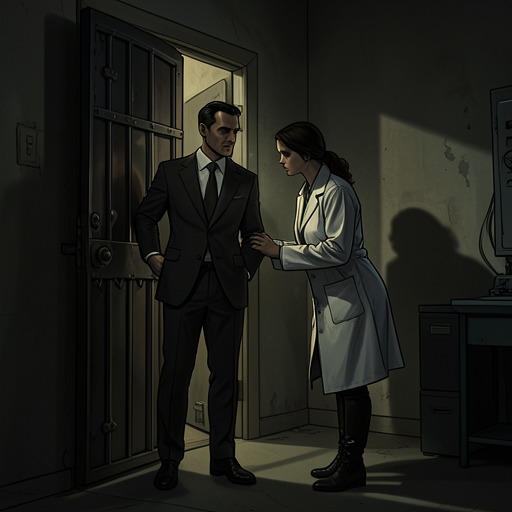
The crisis changed when Rachel warned that the meteorite data were wrong. She told Tench that the meteorite had been inserted from beneath the ice shelf, while stressing that she did not know who had done it or why. Rachel suspected a large-scale fraud involving the NASA administrator and insisted that Herney’s imminent endorsement should be postponed long enough for her to explain. Her warning transformed the problem from uncertainty about a scientific interpretation into evidence that the object itself had been deliberately placed.
The political consequences of the original announcement had already begun to register. Commentators described the discovery as a triumph that could revive Herney’s campaign, while Sexton’s earlier willingness to abolish NASA funding became, in their analysis, a one-two punch against his candidacy. The same news that restored public pride in NASA and confidence in the President therefore raised the cost of correction: Herney would have to retract a claim that had already reshaped the campaign and public response.
The Second Broadcast
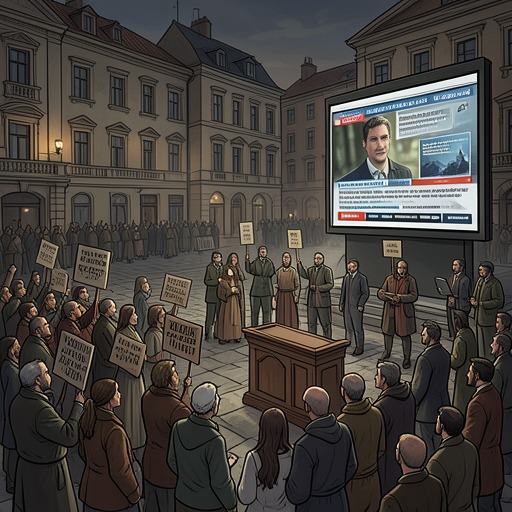
By the time Herney and Gabrielle reached the backstage entrance to the White House Briefing Room, crowds were waiting to hear the President for the second time in twenty-four hours. Gabrielle asked what he would tell them. Herney answered that there was no substitute for the truth, then walked toward the stage. Gabrielle understood the scale of what he was about to do: he was going to admit the biggest mistake of his life, and, in her view, the admission made him appear more presidential rather than less.
Rachel and the other survivors had offered to stand beside Herney as he announced the disappointment, believing they had made the mistake together. Herney refused and shouldered the burden alone. Rachel learned of the completed press conference only after waking at the White House, where she had slept through the day following the Coast Guard helicopter’s transport of her, Michael Tolland, and Corky Marlinson from the Washington Monument. They had been given food, medical attention, and rooms in which to recover; by the time she turned on the television, the public correction had already happened.
The broadcast’s substance was plain: according to the analysts reporting it afterward, NASA had found no signs of life from space after all. The discovery that had been offered as evidence of extraterrestrial life was thus withdrawn as a valid scientific conclusion. The reversal also carried an institutional consequence. Commentators noted that this was the second time that decade NASA had incorrectly classified a meteorite as showing signs of extraterrestrial life, and that respected civilian scientists had also been fooled in this instance.
Political and Public Consequences
The admission did not erase the damage to NASA’s credibility. The analysts described the failed claim as a serious blow to the agency and observed that civilian endorsements had not prevented the error. Yet the political result was not a simple collapse for Herney. One analyst judged that, despite the deception’s magnitude and its likely threat to a president’s career, developments at the Washington Monument had improved Herney’s prospects of retaining the presidency. The correction entered a political landscape already transformed by Sexton’s separate exposure.
Gabrielle’s actions at the Washington Monument had helped create that contrast. After retrieving photographs and borrowing Yolanda Cole’s press pass, she returned to Sexton’s office, assembled duplicate envelopes, and printed copies of his donation checks. She confronted Sexton with the financial evidence and demanded that he give Herney an opportunity to announce his mistake; otherwise, she warned, the remaining material would become public. Sexton took the checks, locked himself in his limousine, and disappeared from public view. Against this backdrop, Herney’s willingness to appear before the country and own a failed announcement sharply differed from Sexton’s retreat.
The two political narratives consequently turned on different forms of exposure. Sexton had built his campaign around NASA’s failures and then made an uncompromising pledge about abolishing its funding; Herney’s own flagship NASA claim proved false. But the President’s public acceptance of the error, set against the senator’s financial troubles and withdrawal, left Herney looking stronger to the commentators even as the scientific claim collapsed. The event does not restore the discovery or spare NASA embarrassment. It shows how the manner of correcting a false claim can alter the political meaning of the failure: the administration loses its announced evidence of extraterrestrial life, while Herney gains stature by refusing to conceal the mistake.